
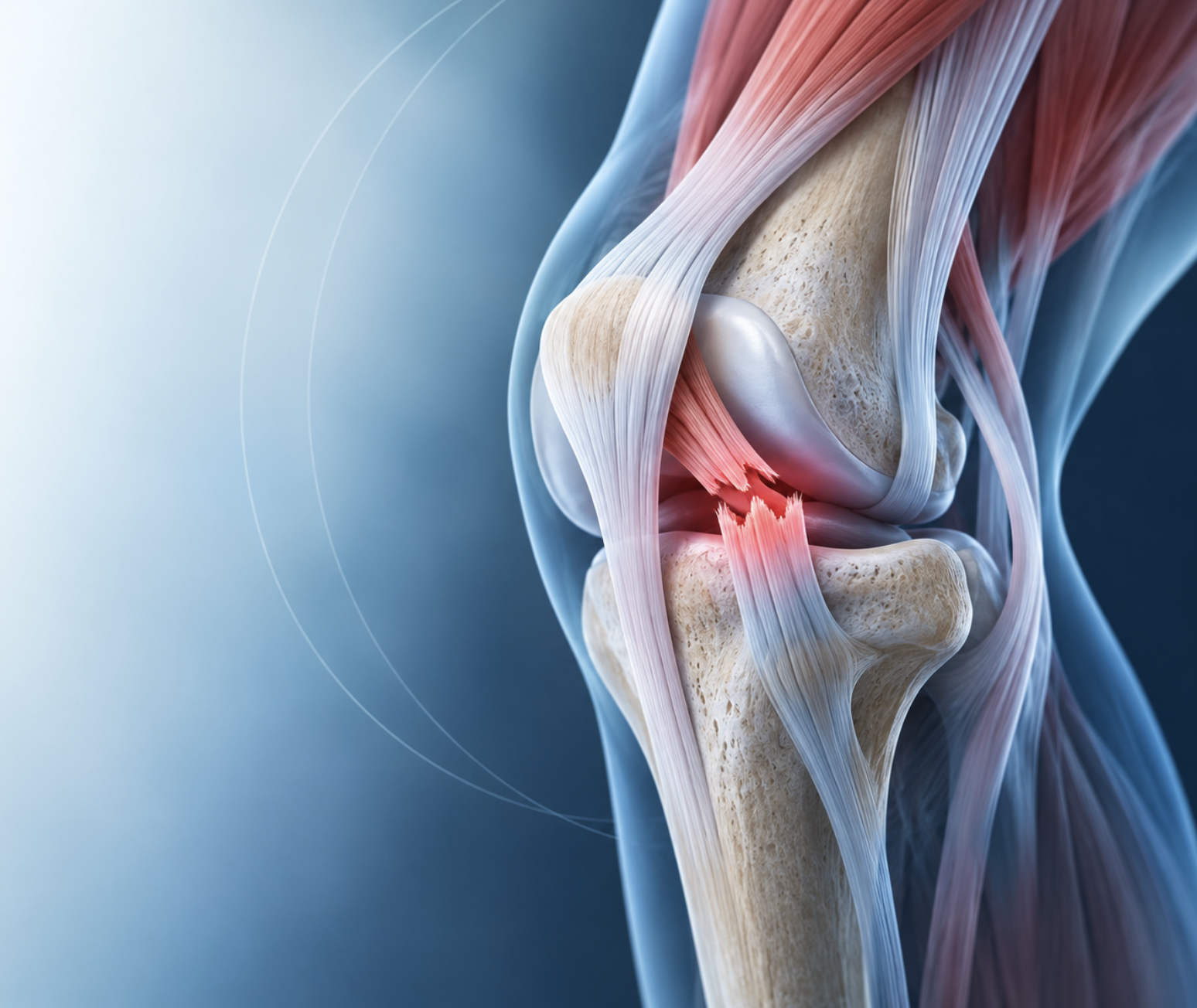
Tendon &
Ligament Tears
Tendons and ligaments are strong connective tissues that play an essential role in movement, strength, and joint stability.
Tendons connect muscle to bone, while ligaments connect bones and help stabilize the joints. These tissues can become injured through sudden trauma, repetitive stress, overuse, or gradual degeneration.
Injuries can range from minor or partial tears to more significant damage. The location and severity of the injury can influence symptoms, function, and the appropriate treatment approach.
Common Symptoms
Commonly Affected Areas
Treatment Based on the Injury.
Tendon and ligament injuries can vary significantly in location, severity, and their effect on movement and joint stability.
At LifeStem, treatment begins with evaluating the injured tissue and understanding the extent of the damage. When appropriate, regenerative and non-surgical therapies may be considered as part of an individualized treatment plan.
More significant injuries, including some complete tears, may require evaluation for other treatment options or surgical care.
PRP Therapy
Platelet-rich plasma uses a concentrated preparation of the patient's own platelets to deliver growth factors to targeted musculoskeletal tissues and support the body's natural healing response.
BMAC Therapy
Bone Marrow Aspirate Concentrate uses components collected from the patient's own bone marrow and may be considered for certain orthopedic and soft-tissue injuries.
Prolotherapy
Prolotherapy may be considered when injured or weakened ligaments, tendons, or other joint-supporting structures are contributing to pain or instability.
Personalized Treatment Planning
Treatment recommendations are based on the tissue involved, severity of the injury, symptoms, functional limitations, and individual patient goals.
A Personalized
Path Forward.
Living with persistent back pain or sciatica can affect everything from work and sleep to exercise and everyday movement.
The next step is understanding what is contributing to your symptoms. LifeStem takes an individualized approach, combining a detailed evaluation with treatment planning based on your specific condition, symptoms, and goals.
Identify the Source
We evaluate your symptoms and the structures that may be contributing to your pain.
Build Your Treatment Plan
Your treatment options are selected based on your diagnosis, needs, and individual goals.
Target the Problem
When appropriate, treatment is directed toward the specific musculoskeletal structures involved.
Support Your Progress
Your response and progress help guide the next steps in your individualized treatment plan.
Find Out What May Be Causing Your Pain.
Schedule a consultation with LifeStem to discuss your back pain or sciatica, review your options, and determine an appropriate next step.