
Can Bone Marrow Concentrate Help Heal a Partial Rotator Cuff Tear?
Can Bone Marrow Concentrate Help Heal a Partial Rotator Cuff Tear?
If you've been told you have a partial rotator cuff tear, you're not alone. This is one of the most common causes of shoulder pain, especially in adults over age 40.
Many people first try physical therapy, anti-inflammatory medications, or steroid injections. While these treatments may reduce pain, they usually do not repair the damaged tendon.
So what happens if you simply wait?
Unfortunately, many partial rotator cuff tears slowly become larger over time. As they progress, they are more likely to require surgery.
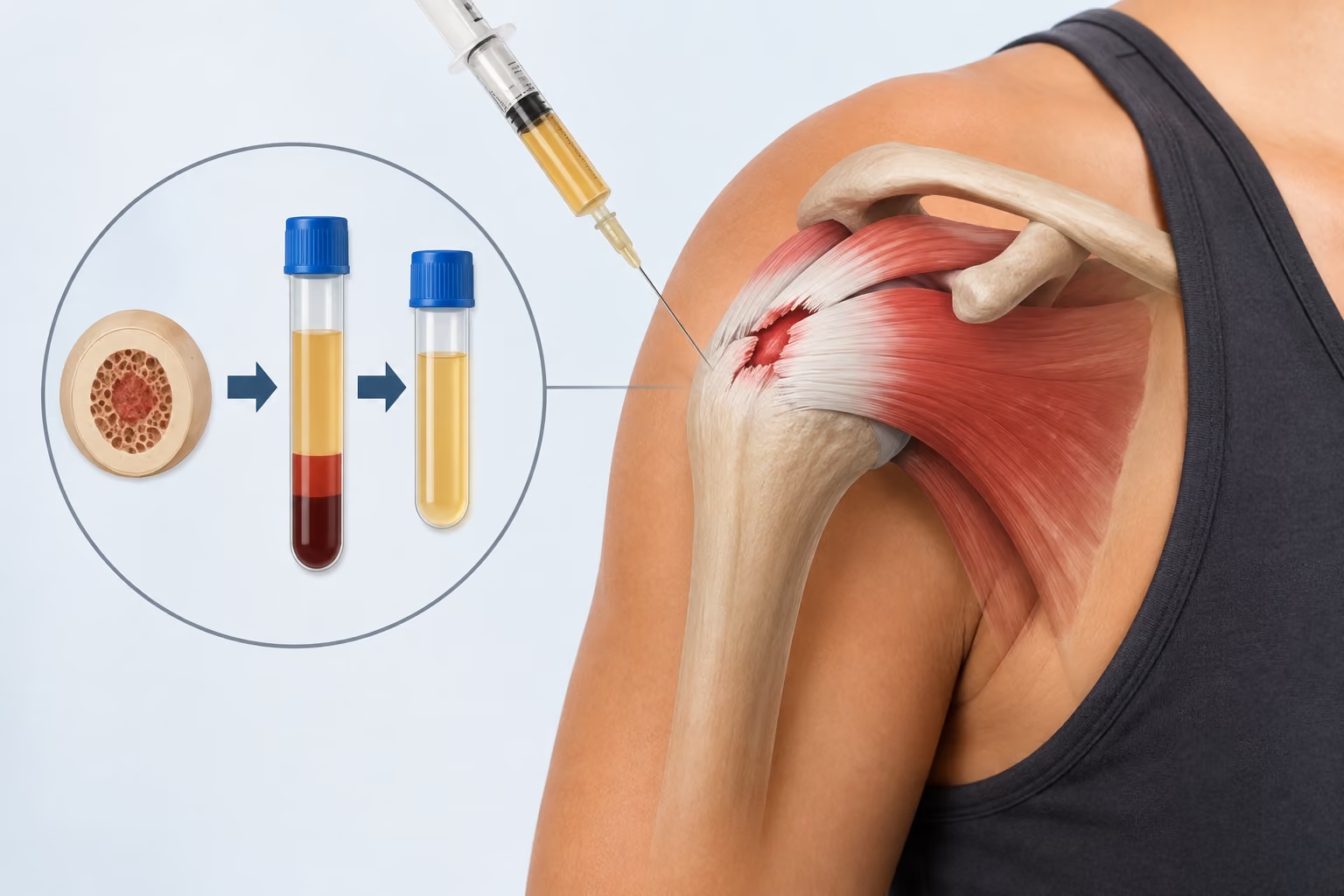
New research suggests that bone marrow aspirate concentrate (BMAC) may do more than relieve pain. In carefully selected patients, it may actually change the natural course of the injury, helping prevent progression to a full-thickness tear and, in some cases, allowing the tendon to heal.
Let's take a closer look at what the science shows.
What Is a Partial Rotator Cuff Tear?
Your rotator cuff is a group of four muscles and tendons that help lift and rotate your arm while keeping your shoulder stable.
A partial-thickness tear means the tendon has been damaged but has not torn completely through.
Common symptoms include:
- Pain when reaching overhead
- Pain sleeping on the affected shoulder
- Weakness lifting objects
- Pain while exercising
- Difficulty throwing or swinging a golf club
- Shoulder pain that has lasted for months despite therapy
The supraspinatus tendon is the tendon most commonly involved.
Do Partial Rotator Cuff Tears Heal on Their Own?
This is one of the biggest misconceptions patients have.
Most people assume that if they avoid using the shoulder long enough, the tear will eventually heal.
Unfortunately, that is almost never what happens.
The rotator cuff has a relatively poor blood supply. Instead of healing, most partial tears enlarge over time because of ongoing wear, age-related tendon degeneration, and repeated mechanical stress.
Several long-term natural-history studies have shown that most partial tears progress, with a substantial proportion eventually becoming full-thickness tears. Once this happens, the tendon may retract, the muscle can weaken and develop fatty degeneration, and surgical repair becomes more difficult or even impossible. Over time, a complete rotator cuff tear can lead to accelerated development of osteoarthritis and the need for joint replacement. These observations have helped shape current recommendations to monitor symptomatic tears rather than simply assuming they will heal on their own.
In other words, the goal is not only to reduce pain today—it is also to preserve the tendon for the future.
Why Is Preventing Tear Progression Important?
As a rotator cuff tear becomes larger, several things can happen:
- Shoulder strength decreases.
- Everyday activities become more difficult.
- Night pain often becomes worse.
- The tendon may pull farther away from the bone.
- The muscle can shrink and develop fatty changes that are difficult or impossible to reverse.
- The chances of a successful surgical repair may decrease.
This is why orthopedic surgeons often talk about the natural history of a rotator cuff tear.
The question isn't simply:
"Can we reduce your pain?"
A more important question may be:
"Can we slow or change the progression of the tear?"
What Is Bone Marrow Aspirate Concentrate (BMAC)?
Bone marrow aspirate concentrate is made from a small amount of your own bone marrow, usually collected from the back of the pelvis in a 10-minute, surprisingly comfortable procedure done under local anesthesia.
The sample is processed during the same visit to create a concentrated solution containing many of the body's naturally occurring healing components, including:
- Platelets
- Growth factors
- Anti-inflammatory proteins
- Immune cells that help regulate healing
- A small population of progenitor cells, often referred to as stem cells
Contrary to what many advertisements suggest, BMAC is not simply a "stem cell injection." It is a complex mixture of biologically active cells and proteins that work together to support the body's healing response.
Researchers believe these components may help reduce inflammation, improve the local healing environment, and support tendon repair.
What Does the Latest Research Show?
One of the most exciting recent studies was led by orthopedic surgeon Dr. Don Buford and colleagues.
The investigators followed patients with partial-thickness rotator cuff tears for nearly eight years after they underwent ultrasound-guided BMAC treatment.
Their findings were encouraging:
- Nearly 80% of patients avoided rotator cuff surgery during follow-up.
- Patients experienced significant improvements in pain and shoulder function.
- Approximately one-third of patients demonstrated imaging evidence of complete tendon healing on follow-up ultrasound.
- Most importantly, the treated tendons appeared to progress to full-thickness tears far less often than would be expected based on the natural history reported in previous studies.
This last point deserves special attention.
Historically, many partial rotator cuff tears gradually enlarge over time. Dr. Buford's study suggests that BMAC may do more than temporarily reduce symptoms—it may actually alter the natural history of the disease by helping stabilize the tendon and decreasing progression to larger tears in appropriately selected patients.
That is an exciting possibility because preventing a tear from becoming full thickness could help many patients avoid surgery.
It is important to recognize, however, that this was not a randomized clinical trial. Larger studies comparing BMAC directly with standard treatments are still needed before definitive conclusions can be drawn. Nevertheless, the long-term follow-up and imaging findings make this one of the most important clinical studies currently available on BMAC for partial rotator cuff tears.
What Do Other Studies Show?
Dr. Buford's findings fit within a growing body of research evaluating orthobiologic treatments for rotator cuff disease.
Recent systematic reviews have reported that biologic treatments—including platelet-rich plasma (PRP) and BMAC—can improve pain and shoulder function in many patients with partial-thickness rotator cuff tears. However, the overall quality of the evidence remains moderate because many studies are relatively small and use different preparation techniques, treatment protocols, and rehabilitation programs.
One important lesson from the current literature is that not every BMAC treatment is the same.
Outcomes may be influenced by factors such as:
- How the bone marrow is collected
- How the concentrate is prepared
- The biologic dose delivered
- The exact location of the injection
- The size and quality of the tendon tear
- The patient's age and overall health
- Commitment to rehabilitation after the procedure
These differences make it difficult to compare studies directly and explain why ongoing research is focused on identifying the patients most likely to benefit.
Is BMAC Better Than PRP?
This is one of the most common questions patients ask.
The answer depends on the individual patient.
PRP has good evidence supporting its use for many tendon conditions and smaller partial rotator cuff tears.
BMAC may be considered in patients with:
- Larger partial-thickness tears
- More advanced tendon degeneration
- Poor tendon quality
- Persistent symptoms despite conservative treatment
- Previous treatments that have not provided adequate improvement
At LifeStem Regenerative Medicine, treatment recommendations are based on the patient's examination, imaging findings, activity level, goals, and overall health—not simply on using the newest or most expensive procedure.
Why Image Guidance Matters
The rotator cuff is made up of several tendons packed into a relatively small space.
Simply injecting biologic material "into the shoulder" is unlikely to provide the same precision as placing it directly into the damaged portion of the tendon.
At LifeStem, every shoulder procedure is performed using advanced ultrasound guidance to visualize the tendon in real time and accurately target the area of injury.
Precision matters.
Who May Be a Good Candidate?
You may be a candidate for BMAC if you have:
- A symptomatic partial-thickness rotator cuff tear
- Persistent pain despite physical therapy
- Shoulder pain that interferes with daily activities or sleep
- A desire to avoid surgery if appropriate
- Realistic expectations and a willingness to participate in rehabilitation
Patients with large traumatic full-thickness tears, significant tendon retraction, severe muscle atrophy, or profound weakness may still be better served by surgical repair. A careful evaluation by an experienced physician is essential.
The LifeStem Difference
At LifeStem Regenerative Medicine, we believe successful regenerative medicine starts with the right diagnosis—not the right injection.
Every patient receives a comprehensive evaluation that includes a detailed history, physical examination, and careful review of imaging. We also assess factors that influence healing, such as metabolic health, inflammation, nutrition, and other medical conditions.
When BMAC is recommended, treatment is performed using image-guided precision to place the biologic exactly where it is needed. Just as importantly, we provide a structured rehabilitation plan designed to support the body's healing process after the procedure.
Our goal is simple: recommend the treatment that gives each patient the best opportunity to reduce pain, improve function, and stay active.
The Bottom Line
A partial rotator cuff tear does not automatically mean you need surgery—but it also should not be ignored.
Growing evidence suggests that bone marrow aspirate concentrate (BMAC) may help carefully selected patients reduce pain, improve shoulder function, and, perhaps most importantly, slow the progression of partial tears to full-thickness tears that often require surgery. Some patients may even experience imaging-confirmed tendon healing.
While additional high-quality clinical trials are still needed, the results reported by Dr. Don Buford and other investigators provide encouraging evidence that regenerative medicine may be able to do more than treat symptoms—it may help change the natural history of rotator cuff disease.
If you have been diagnosed with a partial rotator cuff tear and would like to explore whether regenerative medicine may be appropriate for you, schedule a consultation with LifeStem Regenerative Medicine. Our goal is to help you understand all of your treatment options so you can make the decision that best fits your health, lifestyle, and long-term goals.
Selected References
- Buford D, et al. Long-term outcomes of ultrasound-guided bone marrow aspirate concentrate for partial-thickness rotator cuff tears.