
Bone Marrow Concentrate (BMAC) for Knee Arthritis: Can It Help You Avoid Knee Replacement?
Bone Marrow Concentrate (BMAC) for Knee Arthritis: Can It Help You Avoid Knee Replacement?
If you've been told that you have knee osteoarthritis, you've probably heard the same treatment options over and over:
- Anti-inflammatory medications
- Cortisone injections
- Hyaluronic acid ("gel") injections
- Physical therapy
- Weight loss
- Knee replacement surgery
While these treatments can help some patients, many people find themselves caught in what feels like a frustrating cycle of temporary relief followed by worsening pain.
Many patients ask us:
"Is there anything that can actually help my knee without replacing it?"
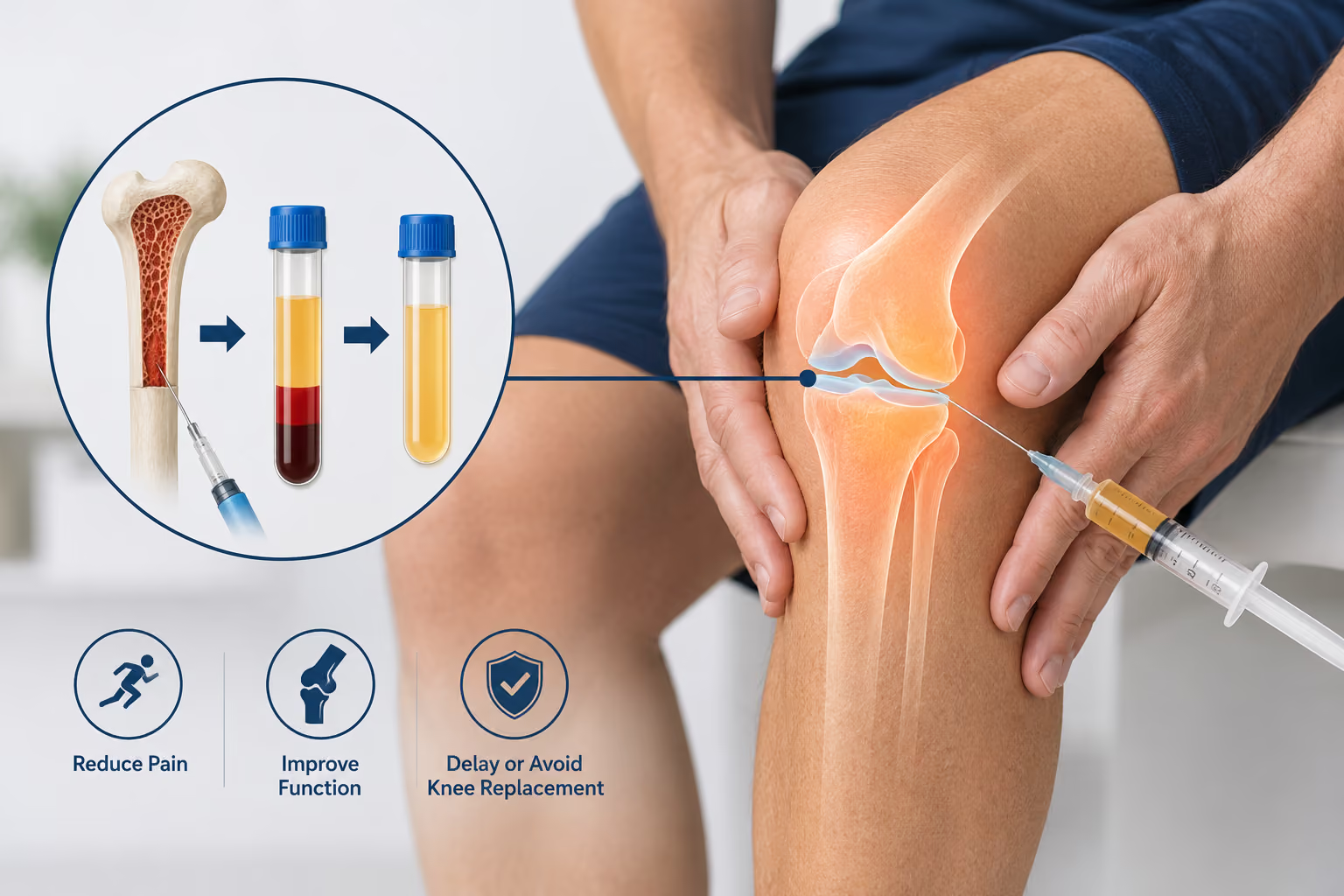
One treatment receiving increasing attention is bone marrow aspirate concentrate (BMAC).
Although BMAC is not a cure for arthritis, growing research suggests it may reduce pain, improve function, and help many patients stay active while delaying—or in some cases avoiding—knee replacement surgery.
Let's look at what today's research tells us.
What Is Knee Osteoarthritis?
Knee osteoarthritis is much more than "wear and tear."
It is a disease that affects the entire joint, including:
- Cartilage
- Bone beneath the cartilage
- The joint lining (synovium)
- Ligaments
- Meniscus
- Joint fluid
- Surrounding muscles
As arthritis progresses, the joint becomes increasingly inflamed.
The cartilage becomes thinner.
The bone underneath becomes irritated.
Inflammatory chemicals continue to drive pain and stiffness.
This is why simply treating one part of the knee often fails to provide lasting relief.
Why Doesn't Arthritis Simply Heal?
Unlike a cut on your skin, damaged joint cartilage has very little ability to repair itself.
Once cartilage is lost, the body has a difficult time replacing it.
As arthritis progresses, patients often notice:
- Pain walking
- Difficulty climbing stairs
- Swelling
- Loss of motion
- Stiffness after sitting
- Trouble golfing, exercising, hiking, or playing with grandchildren
Many patients gradually become less active because movement hurts.
Unfortunately, less activity often leads to weaker muscles, weight gain, poorer cardiovascular health, and even more knee pain.
What Is Bone Marrow Aspirate Concentrate (BMAC)?
Bone marrow aspirate concentrate is created from a small amount of your own bone marrow, usually collected from the back of the pelvis during a brief procedure performed under local anesthesia.
The bone marrow is processed during the same visit to produce a concentrated solution containing many naturally occurring healing components, including:
- Platelets
- Growth factors
- Anti-inflammatory proteins
- Immune cells that help regulate inflammation
- A small population of progenitor cells, commonly called stem cells
Despite what many advertisements suggest, BMAC is much more than a stem cell injection.
It is a complex biologic treatment designed to improve the environment inside the arthritic joint.
Researchers believe these cells and proteins work together to reduce inflammation, influence the immune response, and support the body's natural healing processes.
Can BMAC Regrow Cartilage?
This is probably the most common question patients ask.
The honest answer is:
We don't know.
Some laboratory and imaging studies suggest that BMAC may help improve cartilage quality or slow cartilage breakdown.
However, no high-quality clinical study has shown that BMAC consistently regrows large amounts of normal cartilage in patients with knee osteoarthritis.
That is important because many clinics advertise cartilage regeneration as if it is guaranteed.
The current scientific evidence simply does not support making that promise.
Fortunately, patients do not necessarily need complete cartilage regeneration to experience meaningful improvement.
Reducing inflammation, improving joint function, and decreasing pain may allow patients to remain active for years.
What Does the Research Show?
Over the past several years, researchers have published multiple systematic reviews evaluating BMAC for knee osteoarthritis.
Overall, the findings have been encouraging.
Most studies report significant improvements in:
- Knee pain
- Walking ability
- Daily function
- Quality of life
Many patients continue to experience improvement for one to several years after treatment.
Some recent randomized trials have also demonstrated meaningful improvements in patients with moderate to severe knee arthritis following BMAC treatment.
However, researchers have also reached an important conclusion:
Although BMAC consistently appears safe and effective for many patients, there is not yet enough evidence to prove that it is clearly superior to every other orthobiologic treatment, including platelet-rich plasma (PRP).
That is one reason why treatment should always be individualized rather than assuming every arthritic knee requires the same procedure.
Is BMAC Better Than PRP?
Patients often expect there to be one "best" regenerative treatment.
In reality, the answer depends on the patient.
PRP has excellent evidence supporting its use in patients with mild to moderate knee osteoarthritis.
BMAC may be considered in patients with:
- More advanced arthritis
- Bone marrow changes seen on MRI
- Failure of previous PRP treatment
- More complex joint degeneration
- Patients seeking a more comprehensive orthobiologic approach
At LifeStem, we do not automatically recommend the most expensive treatment.
Instead, we match the treatment to the patient's diagnosis, goals, activity level, imaging findings, and overall health.
Sometimes that treatment is PRP.
Sometimes it is BMAC.
Sometimes surgery remains the best option.
Why Doesn't Every Patient Respond the Same?
One of the biggest lessons from recent research is that not all BMAC treatments are created equal.
Results may be influenced by:
- How the bone marrow is collected
- The concentration technique
- The number of biologically active cells delivered
- The severity of arthritis
- Joint alignment
- Body weight
- Smoking
- Diabetes
- Chronic inflammation
- Rehabilitation after treatment
This helps explain why outcomes vary from one patient to another.
Why Overall Health Matters
At LifeStem, we often tell patients:
"Your body is your own pharmacy."
The quality of the biologic treatment depends on the quality of the biology it comes from.
That is why we frequently evaluate factors that influence healing before recommending regenerative medicine.
These may include:
- Blood sugar control
- Vitamin D levels
- Inflammation
- Nutrition
- Sleep
- Smoking
- Metabolic health
Optimizing these factors may improve your body's ability to respond to treatment.
Why Image Guidance Matters
The knee is far more complex than many people realize.
Pain may come from:
- The joint lining
- Damaged cartilage
- Bone beneath the cartilage
- Meniscus
- Ligaments
- Tendons
Successful treatment depends on identifying exactly where the problem originates.
At LifeStem, every regenerative procedure is performed using advanced imaging guidance to precisely deliver treatment where it is intended.
Precision matters.
Who May Be a Good Candidate?
You may be a candidate for BMAC if you have:
- Persistent knee pain from osteoarthritis
- Pain despite physical therapy or medications
- A desire to remain active
- A goal of delaying knee replacement
- Realistic expectations regarding treatment
Patients with severe deformity, marked instability, or end-stage bone-on-bone arthritis may still benefit most from knee replacement surgery.
A comprehensive evaluation is essential before deciding which treatment is most appropriate.
The LifeStem Difference
At LifeStem Regenerative Medicine, we believe regenerative medicine should never be a one-size-fits-all solution.
Every patient receives a detailed evaluation that includes a thorough history, physical examination, and careful review of X-rays or MRI studies. We also assess your overall health because your body's ability to heal plays an important role in treatment success.
When BMAC is recommended, we perform every procedure using image-guided precision and develop a personalized rehabilitation plan designed to maximize recovery.
Our goal is not simply to reduce pain today.
Our goal is to help you stay active and maintain your quality of life for years to come.
The Bottom Line
Bone marrow aspirate concentrate is one of the most promising regenerative treatments available for knee osteoarthritis.
Current research suggests that BMAC can reduce pain, improve function, and help many patients remain active while delaying knee replacement. At the same time, the medical literature reminds us that BMAC is not a miracle cure. It does not reliably regrow cartilage, and it is not the best treatment for every patient.
The best outcomes occur when the right patient receives the right treatment in the right place, at the right time.
If you are living with knee arthritis and want to explore your options before considering knee replacement surgery, a consultation at LifeStem Regenerative Medicine can help you understand whether PRP, BMAC, or another treatment is the best fit for your individual goals.